Menopause, Metabolism & the Power of 5-Element Yin Yoga
Restorative practices like Yin Yoga can boost positive effects in mood, sleep and metabolism.
What if you could change the way your metabolism works in perimenopause and menopause by doing less, not more? For the past decade, I’ve been quietly testing this in my own body and with some of my patients. The results aren’t a magic bullet approach, but rather steady, sustainable, and deeply impactful.
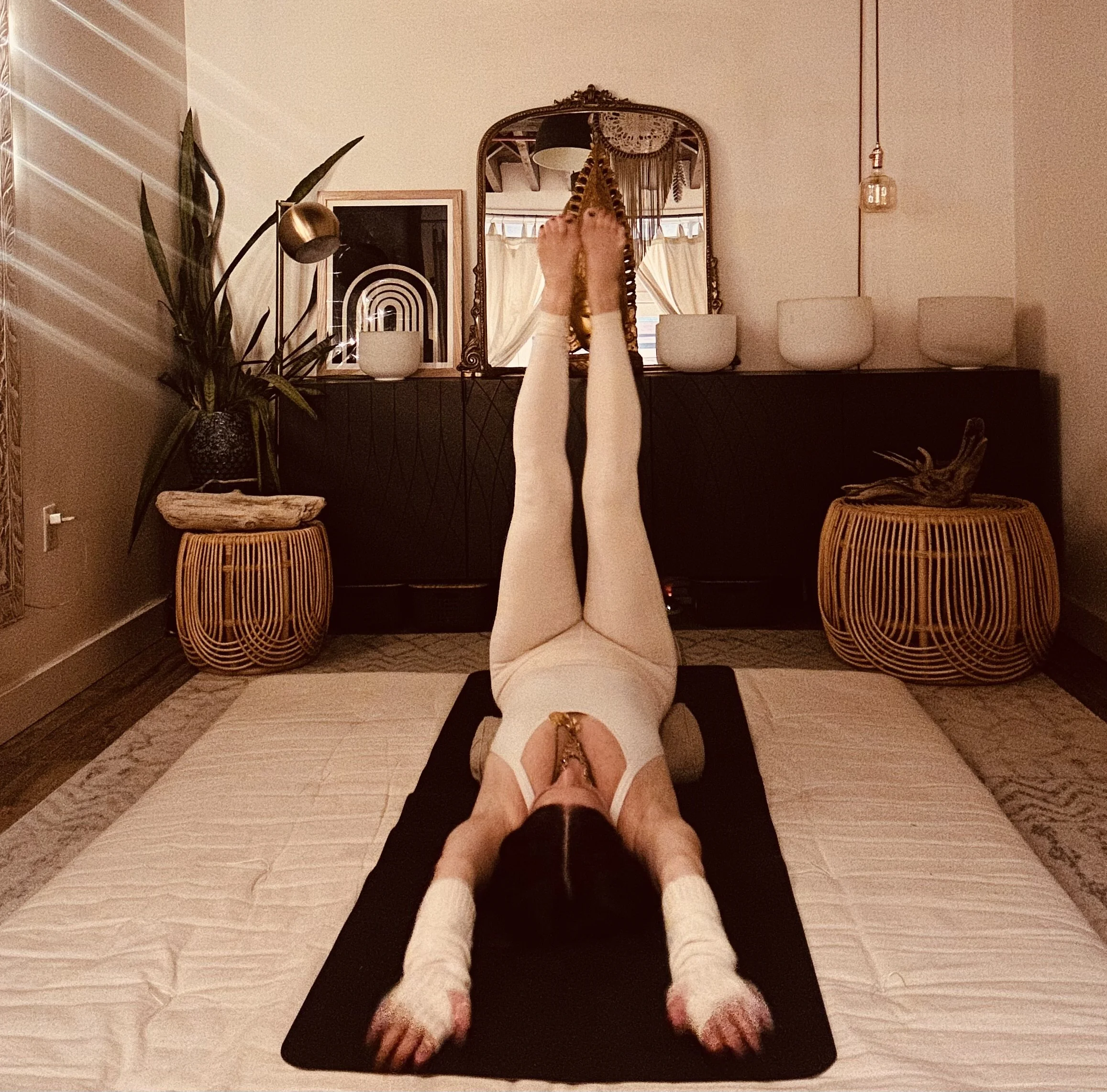
Yin yoga has been at the heart of my personal practice since 2009, and it’s the first place I turn when my body feels dysregulated. While it’s my go-to, the truth is this: all restorative practices matter during this transition, and right now, in my treatment room, I’m seeing a clear pattern unfold. More and more women navigating perimenopause and menopause are coming in with the same cluster of symptoms:
• Weight gain around the middle
• Poor sleep
• Hot flashes and night sweats
• Brain fog
• Anxiety
What we might have considered “hormonal inconveniences” actually reflect a deeper shift in how the nervous system and metabolism are communicating.
So where does Yin Yoga fit in?
During this phase, fluctuations in estrogen and progesterone can increase cortisol sensitivity. And when cortisol stays elevated, the body holds onto weight more easily (especially around the abdomen) while also disrupting sleep, mood, and energy.
Yin yoga works differently than the “push harder” approach many of us are used to. It gently guides the body out of a chronic stress response and into a more regulated state where healing, hormone balance, and metabolic repair can actually occur.
No equipment needed. You can even do it in bed!
More often than not, my patients that add my yin yoga “formulas” to their routine notice a smoothing out of emotions, deeper sleep, feeling less reactive over all. One client described her post yin experience like this: “After yin, I feel like I took a magnesium bath… without the bath.”
Your mind softens.
Your body feels nourished.
Sleep comes more easily.
The nervous system settles.
And here is the important part:
When the nervous system settles, the body no longer feels like it needs to hold on so tightly. That’s where real change begins.
As an acupuncturist, this is how I think about Yin Yoga.
I don’t approach it as a one-size-fits-all sequence. I build yin “formulas”much like I would prescribe an herbal formula or build a point prescription for an acupuncture treatment. Each one is designed with intention.
Every patient has a different constitution, a different pattern, a different story. So I select the “ingredients” accordingly:
• grounding poses to anchor an overactive nervous system
• gentle backbends to support kidney and adrenal energy
• forward folds and side bends to calm the mind and soften the liver
It’s a personalized, therapeutic approach where the practice meets you exactly where you are. Because in this phase of life, the goal is to work smarter, not harder, in partnership with your body.
If this resonates, I’d love to hear your experience. Have you noticed your body asking for less instead of more in this phase? And if you’re navigating perimenopause or menopause and feeling stuck, this is exactly the work I do in my Brooklyn practice—blending acupuncture, yin yoga, Chinese medicine and nutrition to support your body through this transition.
WHy I recommend light therapy in Tandem with your Acupunture TReatment

When I first learned about light therapy, it felt like the perfect bridge between what I already do with needles, bodywork, yoga and nutrition and what modern research is showing about how our cells respond to gentle, specific wavelengths of light. Two years ago, I took the plunge and added LED (red, green, blue) and near-infrared (NIR) light therapy to my practice as an ongoing support for skin health, nervous system regulation, muscle and joint recovery, and hair restoration.
A quick note on wavelengths (nanometers) and what they mean
Each color of light has a slightly different wavelength, measured in nanometers (nm).
Shorter wavelengths (blue, ~415–450 nm) stay very close to the surface of the skin.
Medium wavelengths (green, ~520–540 nm; red, ~630–660 nm) reach into the epidermis and dermis.
Longer wavelengths (near-infrared, ~800–900 nm and beyond) travel deepest, reaching muscles, joints and even influencing brain tissue in certain applications. PMC+1
Different depths mean different clinical benefits. Here’s how I’m using each color.
Red LED Light (≈ 630–660 nm): Skin repair, pain modulation & hair support
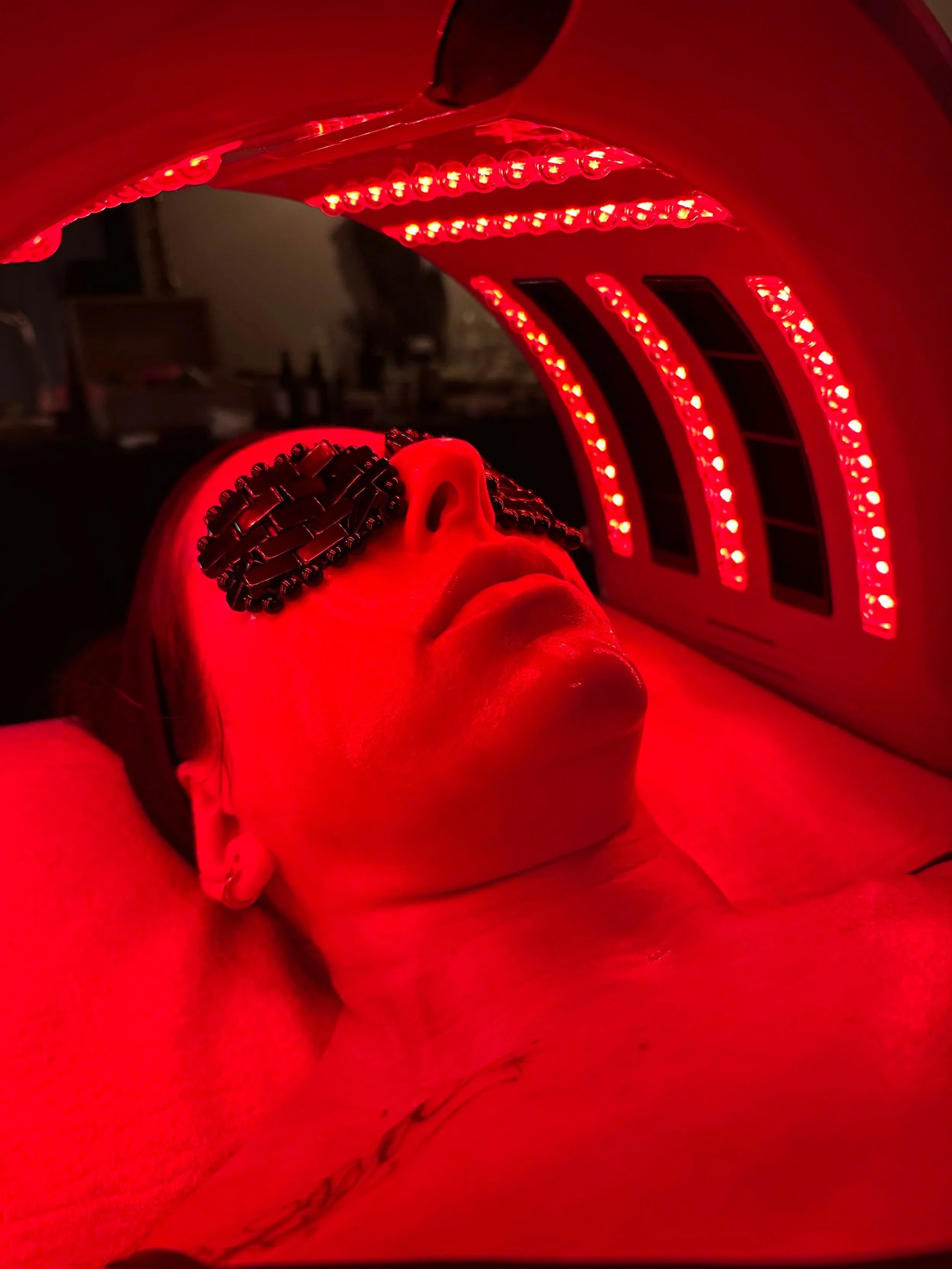
Red light therapy after micro needling
Red light in the 630–660 nm range is one of the most researched wavelengths in photobiomodulation (PBM). I use it for skin health, nervous system support, longevity, muscle and joint pain, and hair restoration.
Skin health
Red LEDs have been shown to:
Stimulate collagen production and reduce wrinkles by influencing fibroblasts and matrix metalloproteinases (MMPs). In one clinical study, red LED therapy improved wrinkle depth and skin roughness in over 90% of participants, with no downtime.
Improve overall skin texture and tone, including redness and mild scarring.
This is why I often pair red light with cosmetic acupuncture facials, micro-needling and facial gua work, which naturally affects the lymphatic system. it supports the same collagen pathways we are trying to nourish from the inside out.
Nervous system support
Red and near-infrared light both act on mitochondria (powerhouse of the cell), especially the enzyme cytochrome c oxidase, which can improve cellular energy and reduce oxidative stress. PBM to the head and body has been explored as a supportive therapy for mood, anxiety, and cognitive function, likely through increased blood flow, reduced inflammation, and improved neuronal metabolism. PMC+2ScienceDirect+2
I see amazing results when I add red light therapy to my treatments for patients with anxiety and depression. While I am not recommending it as a stand alone treatment for mental health disorders, I do see red light as one more gentle tool to help calm an overtaxed nervous system alongside acupuncture, breath work, yoga, and traditional talk therapy.
Muscle, joint & pain Relief
Red light, especially when combined with near-infrared, has been shown to:
Reduce delayed onset muscle soreness (DOMS)
Improve muscle performance and recovery when used before or after exercise PMC+2MDPI+2
In practice, I might place panels over the low back, knees, or shoulders while needles are doing their work, to support circulation, tissue repair, and pain modulation.
Hair restoration
Low-level red light (often around 655 nm) has been studied for androgenetic (pattern) hair loss. Randomized, sham-controlled trials have shown significant improvements in hair counts in both men and women using red light–based devices. SpringerLink+3PMC+3JCAD+3
For hair protocols, I pair red and NIR light with scalp acupuncture, micro-needling and topical/ internal herbal support to encourage follicles back into an active growth phase.
Green LED Light (≈ 520–540 nm): Pigment, redness & “cooling” the skin
Green light sits between blue and red in terms of penetration. It mostly affects the epidermis and upper dermis, where many pigment and vascular issues live.
Skin health
Clinical studies using green-spectrum lasers (typically around 532 nm) have shown:
Improvement in hyperpigmentation and melasma, particularly epidermal pigment, because green light is selectively absorbed by melanin and hemoglobin in more superficial layers. PMC+2AD Annals of Dermatology+2
While lasers and LEDs are different in power and delivery, we borrow wavelength lessons from this research. I use green LED to gently support:
Blotchiness and visible redness
Overall tone in combination with red light for rejuvenation
Nervous system & recovery
Green light doesn’t penetrate as deeply as red or NIR, so its primary role in my practice is soothing the skin, which indirectly soothes the nervous system. When the face feels less hot, reactive, or inflamed, we often see a softening in overall stress load, especially in sensitive, rosacea-prone, or “reactive” skin types.
Blue LED Light (≈ 415–450 nm): Clarifying, antibacterial surface support
Blue light has the shortest wavelength of the LEDs I use and stays very close to the skin surface.
Skin health
Blue LED (around 415 nm) is best known for acne:
It helps reduce Cutibacterium acnes (formerly Propionibacterium acnes) by exciting bacterial porphyrins that then generate reactive oxygen species, creating an antimicrobial effect without systemic antibiotics. MDPI+3PubMed+3OUP Academic+3
Randomized trials and systematic reviews show improvements in inflammatory acne lesions using blue or combined blue + red light regimens.
I layer blue LED into treatment plans for congested, breakout-prone skin, then follow with red light to support healing and reduce post-inflammatory marks.
Nervous system, muscle & hair
Blue light is not my primary tool for nervous system work, muscle recovery, joints, or hair growth, that is where red and near-infrared shine. However, clearing painful, inflamed skin (especially on the face) can have a profound emotional and nervous system impact, so it fits into the picture of whole-person care.
Near-Infrared (NIR) Light (≈ 800–900+ nm): Deep tissue, joints & brain
Near-infrared light is invisible to the eye but deeply felt by the body. Its longer wavelength allows it to reach muscles, joints, and even brain tissue in specific transcranial applications. JKS LMS+3PMC+3MDPI+3
Muscle recovery & joint health
NIR PBM has been shown to:
Reduce muscle fatigue and improve recovery when used before or after exercise Archives PMR+3PMC+3ScienceDirect+3
Help with joint pain and function in conditions like osteoarthritis in some clinical trials
In the clinic, I use NIR panels over knees, hips, shoulders, or the low back while acupuncture supports meridians and fascial lines. It’s a beautiful combination for:
Athletes or active adults recovering from training
Chronic joint or tendon pain
Post-injury recovery, when appropriate
Nervous system & brain health
Red and NIR light to the head (transcranial photobiomodulation) has growing evidence as a supportive therapy for:
Mood and anxiety disorders
Cognitive function and neurodegenerative conditions
Traumatic brain injury recovery
These effects are thought to come from improved cerebral blood flow, mitochondrial function, reduced inflammation, and enhanced neurogenesis. SAGE Journals+4PMC+4MDPI+4
I integrate this more gently in practice, using NIR near the head and neck while we work with acupuncture points to down-shift the nervous system into a rest-and-repair state.
Hair restoration
NIR (for example 808–830 nm) often appears in combination devices with red light for hair loss, and some data suggest that these deeper wavelengths further support hair density and scalp health. ISHRS+2Actas Dermo-Sifiliográficas+2
In my hair restoration protocols, NIR is part of a layered approach that includes:
Acupuncture and scalp microneedling (when indicated)
Light therapy at red and NIR wavelengths
Nutritional and hormonal support when appropriate
Why this matters in my practice
I didn’t add LED and near-infrared light therapy to chase a trend. I added them because:
They align with my existing philosophy: gentle, non-invasive, cumulative therapies that respect the body’s own healing intelligence.
There is a growing body of peer-reviewed research supporting their role in skin rejuvenation, acne, pigment, muscle recovery, joint pain, mood, and hair restoration. SAGE Journals+4Wiley Online Library+4Lippincott Journals+4
They layer beautifully with acupuncture, facial rejuvenation, movement, and breath, enhancing outcomes without adding more strain to the system.
In other words, light becomes another way to “needle” the body, without a needle, inviting cells, fascia, nerves, and follicles to remember how to heal.
If you are curious whether red, green, blue, or near-infrared light could be woven into your treatment plan, we can explore it together at your next visit.
Why Women Gain Weight During Menopause (and What Actually Helps)
One of the most frustrating changes I experienced during my own perimenopause and menopause journey was the dreaded weight gain — particularly around the abdomen. And did I mention the puffiness? I just felt thick all over and couldn’t seem to get a handle on it.
Even women who have maintained the same habits for years suddenly notice their bodies responding differently. I see this happening in patients as early as age 35.
To be fair, during that time I was also saying goodbye to both of my parents through their illnesses. I had not yet discovered that I was living with chronic Lyme disease, and I was suffering from severe osteoarthritis in my right knee. I had been managing fairly well when suddenly I could no longer sit comfortably in a seated twist, touch my toes, or move easily through my almost daily yoga practice.
The truth is, menopause weight gain can seem to come out of nowhere and can truly blindside us. But it isn’t simply about eating habits, exercise routines, or even grief. It is the result of hormonal changes, shifts in metabolism, and changes within the nervous system.
Understanding what is happening in the body can be the first step toward responding with strategies that are supportive rather than restrictive.
Why Weight Changes During Menopause
During perimenopause and menopause, estrogen levels fluctuate and eventually decline. Estrogen plays a significant role in how the body regulates metabolism, fat distribution, and insulin sensitivity.
As estrogen decreases, several changes can occur:
The body becomes more likely to store fat around the abdomen
Muscle mass gradually declines, slowing metabolism
Blood sugar regulation becomes less stable
Stress hormones such as cortisol become more influential
When cortisol remains elevated due to chronic stress, poor sleep, or nervous system dysregulation, the body becomes more prone to storing fat centrally. This is why many women notice abdominal weight gain even when their diet and activity levels have not dramatically changed.
Think of It Like Driving a Car That Never Turns Off
Imagine driving a car that is never turned off.
In your 20s and even your 30s, you press the gas pedal and everything runs smoothly. But eventually there comes a time when the gas starts to run low — except you don’t realize it, because the gas gauge isn’t working properly.
So you keep pressing the pedal.
If we compare this to the body, you continue pushing forward, trying to move the car even though the tank is empty. Over time the entire system becomes stressed. The body releases cortisol and other stress hormones in response to the strain.
When these hormones are released chronically, they begin to affect appetite signals, blood sugar regulation, and fat storage. The body responds by conserving energy, storing fat, and slowing metabolism.
Eventually the system becomes overworked, and the result can be weight gain and a metabolism that simply doesn’t respond the way it once did.
A Nervous System Perspective
One of the most overlooked factors in menopause weight gain is the role of the nervous system.
When the body remains in a state of chronic stress — which may show up as agitation, irritability, or feeling quick to react — the sympathetic nervous system, our “fight or flight” response, stays activated.
When we spend extended time in this state, the body prioritizes survival over repair.
This is where practices that calm and regulate the nervous system can have a powerful impact on metabolism, digestion, and hormonal balance.
What Actually Helps
What used to work often needs some adjustment. The old formula of “exercise more and eat less” simply doesn’t support the body in this phase of life.
Menopause support works best when the body is approached with strategies that nourish and stabilize the nervous system. This might look something like:
Eating regular meals that stabilize blood sugar
(think complex carbohydrates, balanced protein, and healthy fats)Strength and resistance training to maintain muscle mass
(yes, lifting heavy things!)Restorative movement such as yin yoga, which provides therapeutic joint compression, connective tissue hydration, and space for contemplative work
Stress reduction and nervous system regulation
(breathwork, journaling, time in nature, red light therapy, meditation)Prioritizing sleep — because rest truly means restoration
Acupuncture can also play an important role by supporting hormone regulation through the meridian networks that influence the flow of Qi. Treatments can help reduce stress, restore balance within the nervous system, and improve metabolic function.
A New Approach to Midlife Health
Menopause is a natural transition that requires new strategies to support the body’s evolving physiology.
As more research emerges about what women actually need during this stage of life, it becomes increasingly clear that many traditional approaches to weight loss were never designed with women’s midlife biology in mind.
If you are struggling with menopause or perimenopausal symptoms, you are not alone.
Feel free to reach out if you need support, and check back here for more information and upcoming programming.
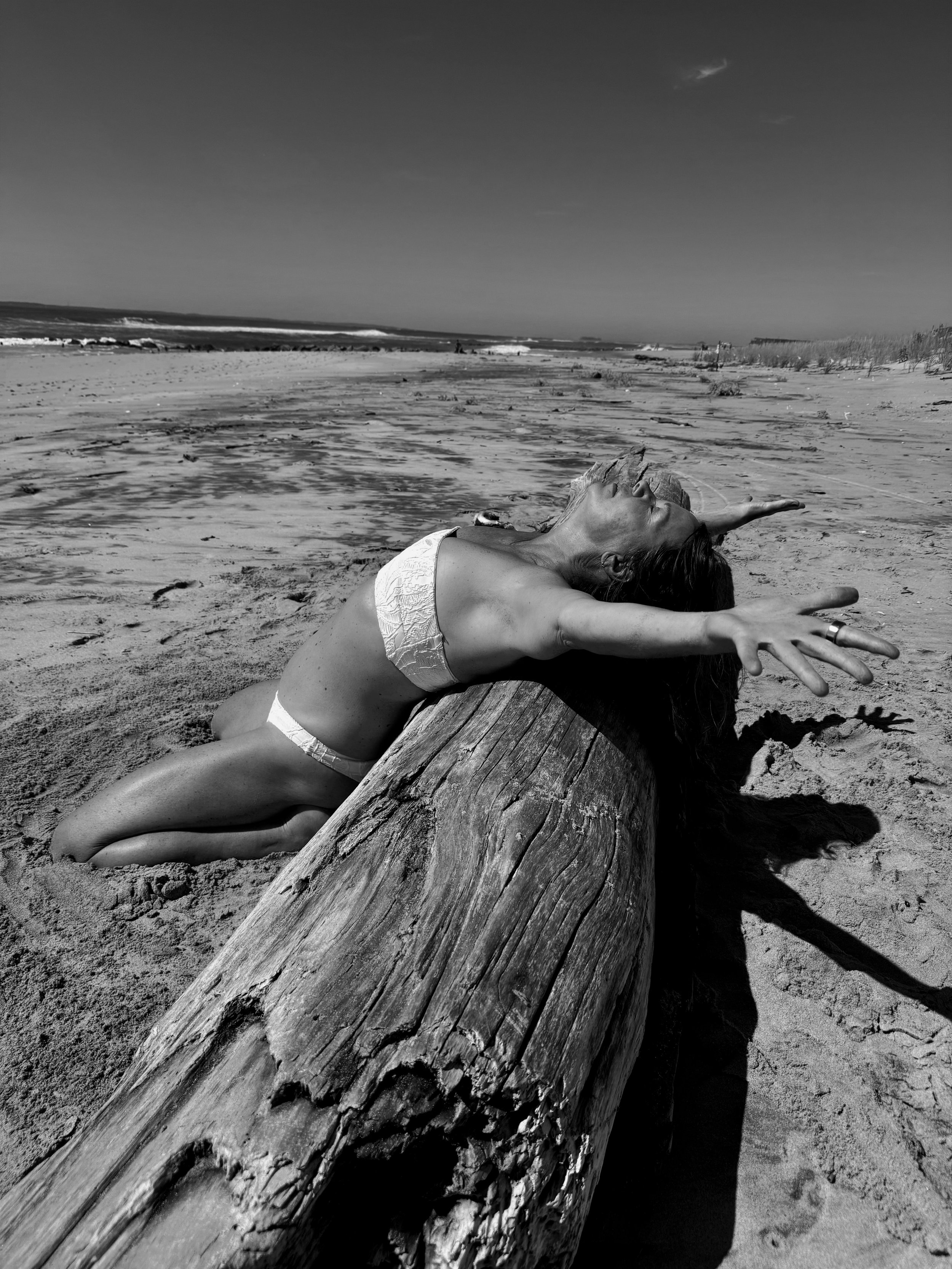
Below are photos of me from 2024 and 2025. Over the course of a year and a half I focused deeply on nervous system regulation while incorporating walking, hiking, strength training, and Pilates. I paired this with eating at regular intervals and maintaining daily practices of yin yoga, meditation, and breathwork.
The results were steady and sustainable: gradual weight loss, reduced joint pain, improved sleep, increased muscle tone, and better overall energy.
I also take a low-dose hormone replacement therapy, which I began post-menopause, and supported my transition with Chinese herbal formulas and targeted supplements.
The results have been remarkable.
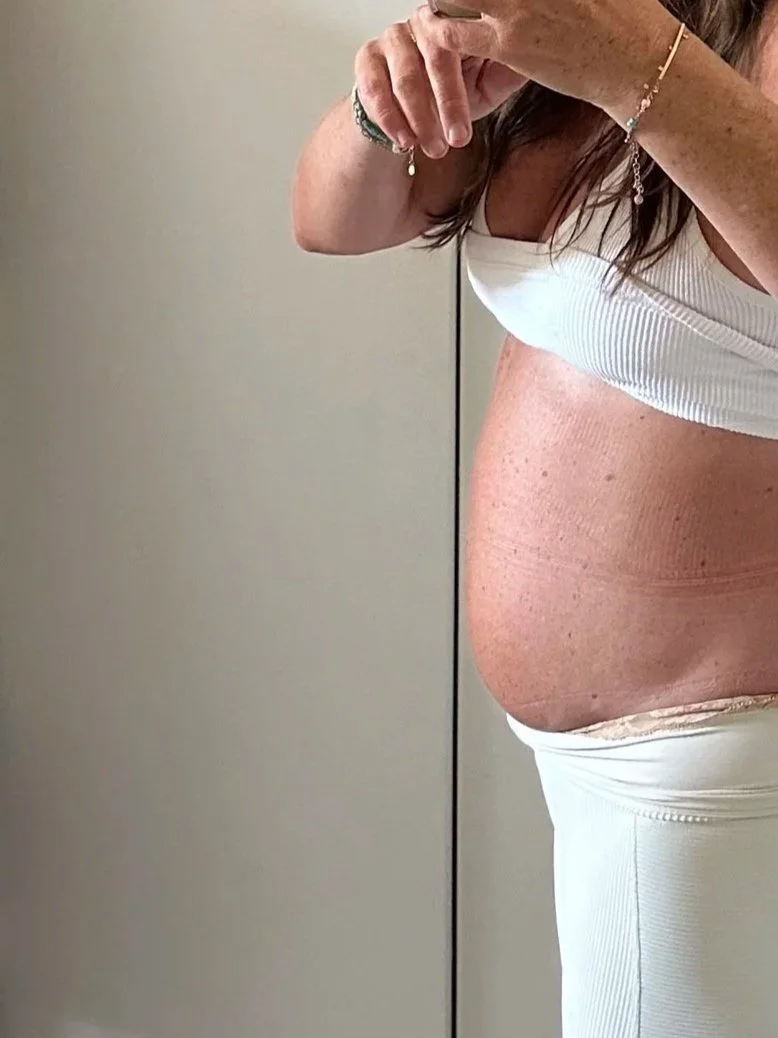
Menopause belly 2024
Modified Saddle pose one year later, 2025
ELEMENTAL ALCHEMY: A 5-Element Yin Practice to Nourish your inner landscape
Duration: ~25–30 minutes
Props: Bolster, blanket, blocks and yoga mat or rug
Centering: Breath & Awareness
Find a comfortable seat or lie back in Supta Baddha Konasana (reclined butterfly).
Close your eyes and bring one hand to your belly, one to your heart.
Begin to follow the rhythm of your breath inhaling through the nose, exhaling through the mouth.
Inhale like a rising tide, exhale like water returning to the sea.
Sense yourself as part of nature’s cycle not separate from it, but moving within it.
Wood Element — Liver & Gallbladder
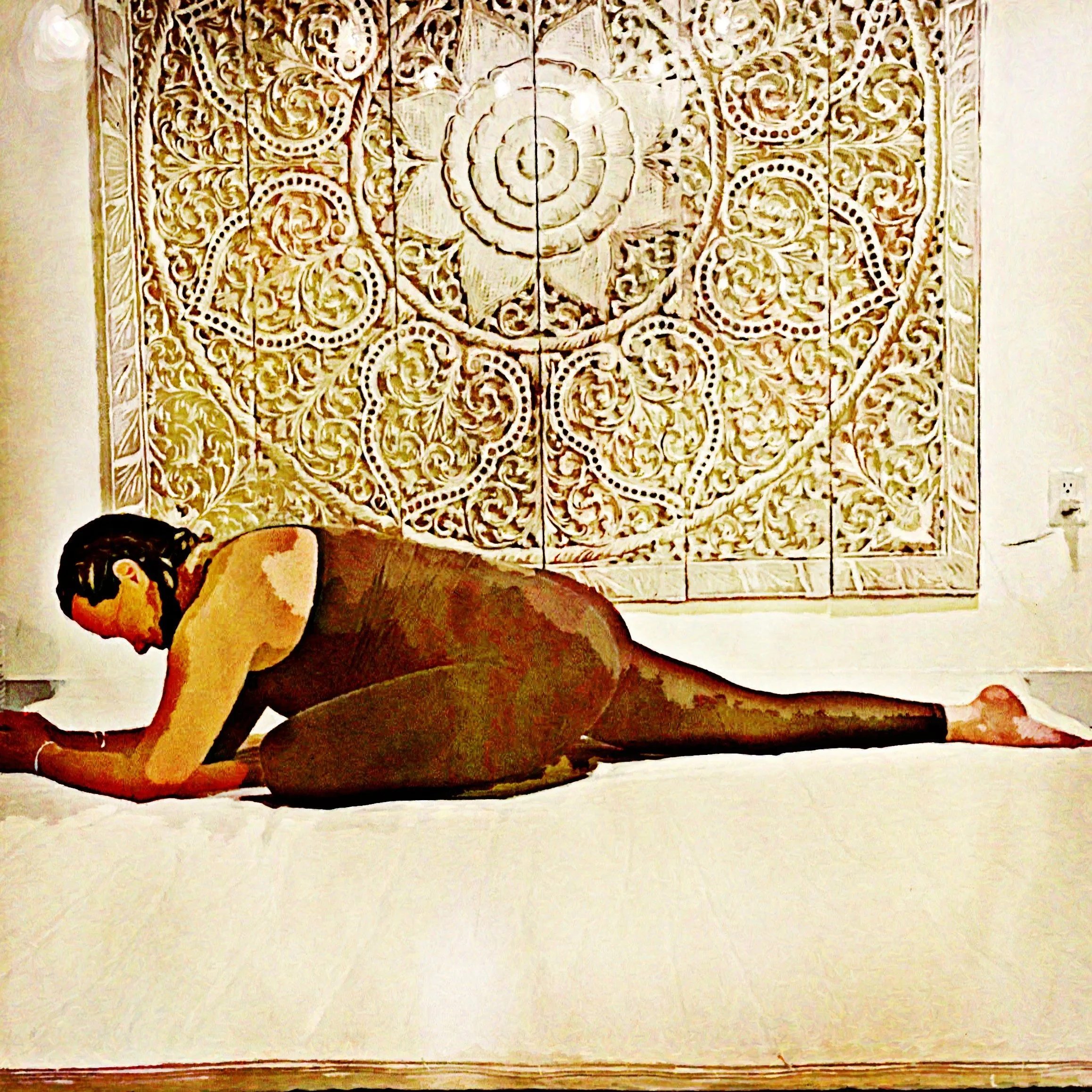
Pigeon Pose
The Wood element rises up in spring and represents growth, vision, renewal.
Breathe into your rib sides, where the Liver and gallbladder meridian Qi flows.
As you soften into the pose, visualize green shoots emerging through soil.
If there’s frustration or stagnation, let the breath create space.
Affirmation: “I release what blocks my growth. I trust the direction that my life is unfolding.”
Hold for 3-5 minutes.
🔥 Fire Element — Heart & Small Intestine

Low Lying Twist
The Fire element is summer and encourages our connection to joy, community, expansion.
Allow the chest to open and the breath to warm the heart space. Feel light and radiance spreading through your body like sunlight.
Affirmation: “I am open to love, laughter, and warmth.”
Hold for 3-5 minutes per side
🌾 Earth Element — Spleen & Stomach
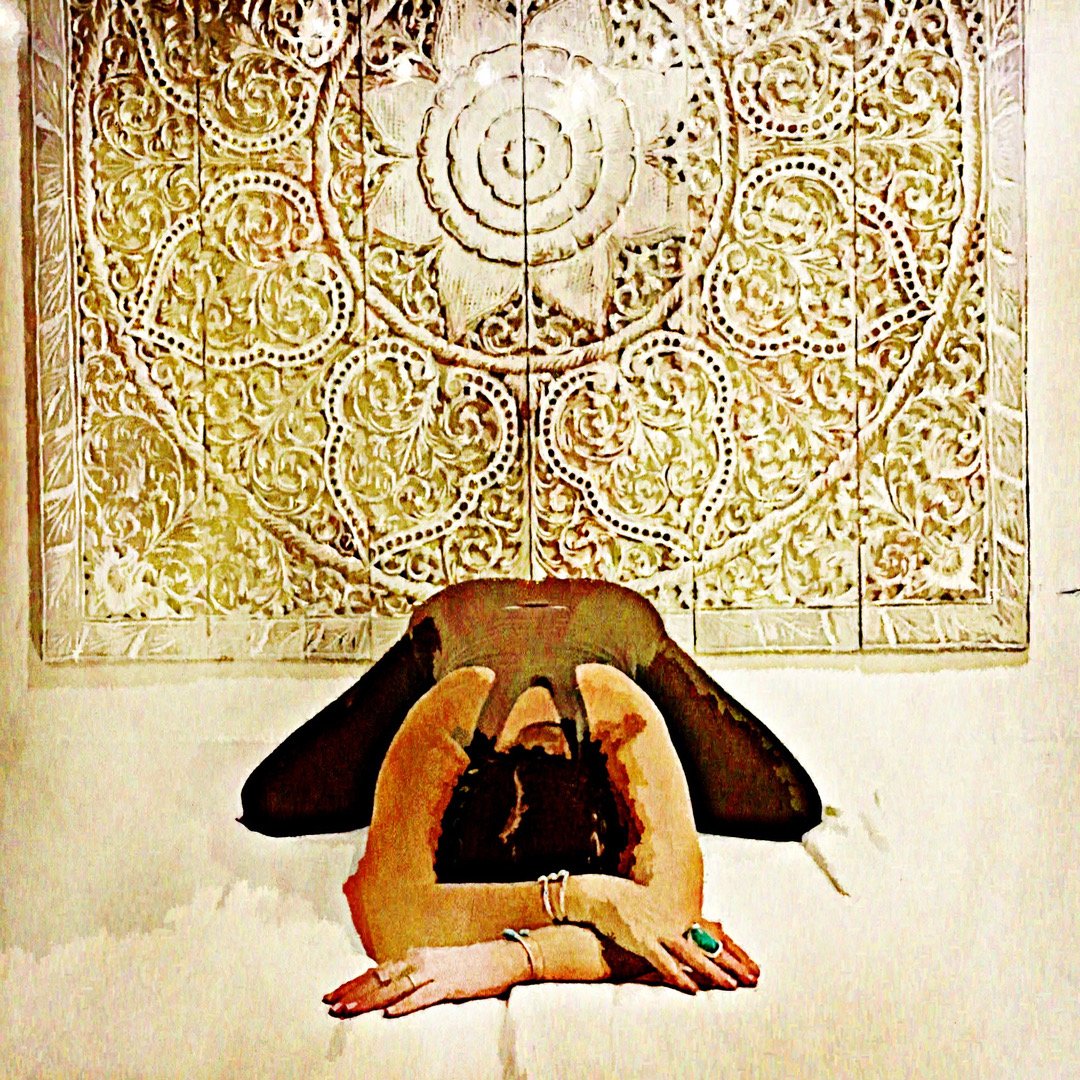
Wide Child Pose
Earth represents late summer, a time to focus on the body’s nourishment, stability, and receiving.
Let your body soften into the support beneath you. Imagine being held by the earth itself, feeling steady and whole.
Affirmation: “I am grounded. I receive nourishment with ease.”
Hold for 3-5 minutes or more.
🍂 Metal Element — Lungs & Large Intestine

Melting Heart
The Metal element is autumn and represents release, refinement, and breath.
Breathe deeply into your upper back and chest, inviting spaciousness. With each exhale, imagine letting go of what no longer serves you.
Affirmation: “With every breath, I create space for what truly matters.”
Hold for 3 minutes per side
🌊 Water Element — Kidneys & Bladder

Caterpillar Pose
Water is winter, a time for rest, reflection, and call on our innate wisdom.
Soften into stillness and feel your spine gently round, like a wave folding into the shore. Imagine a deep reservoir within, filling slowly, offering healing from the source.
Affirmation: “I rest into my inner depth. I trust the flow of life.”
🌕 Closing
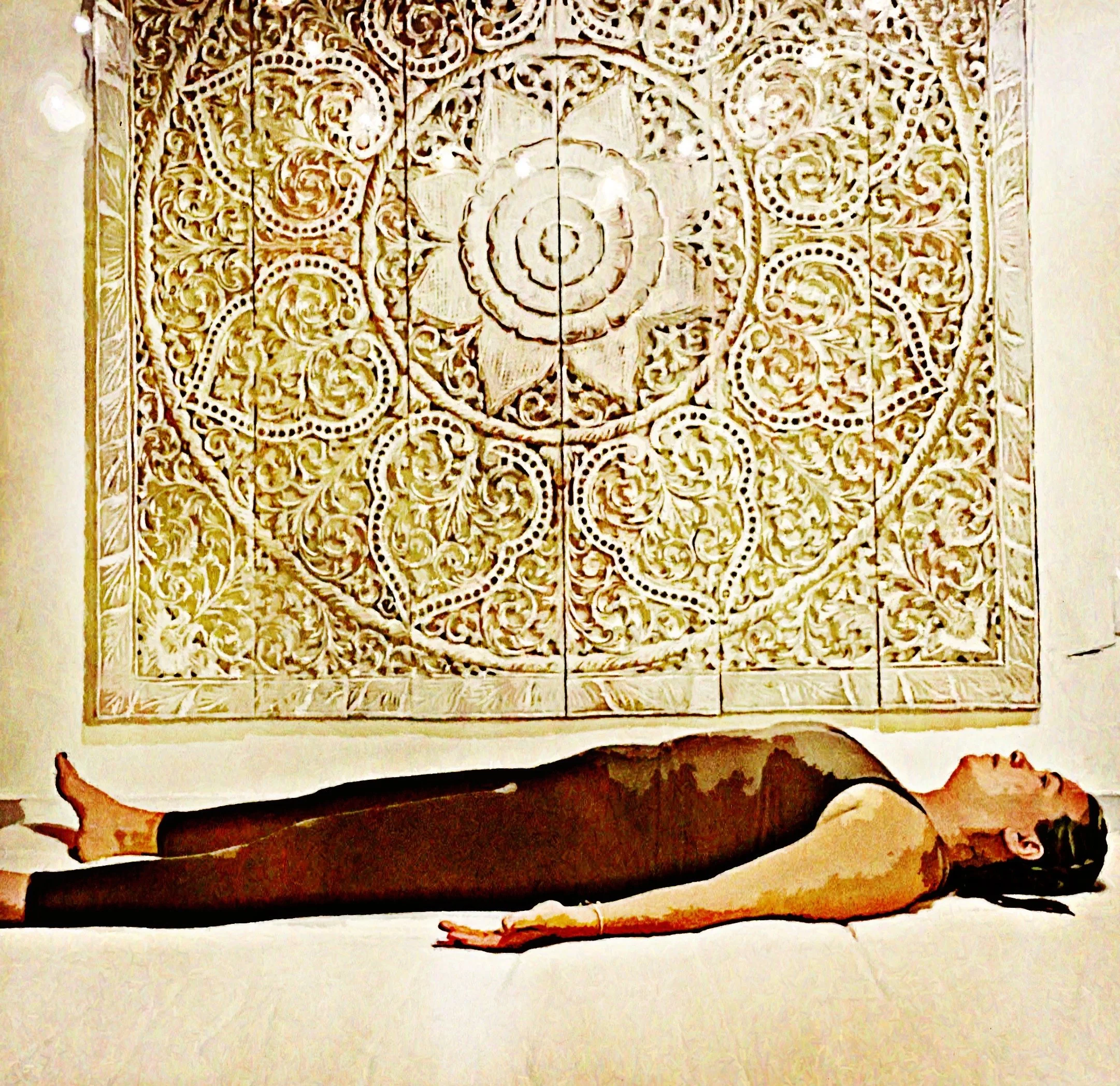
Savasana
Come to rebound in Savasana or sit quietly with hands over the heart. Feel the integration of the energy that the shapes represent. Your meridians are activated, the five elements within you hold space for resourcing their potential - Wood’s vision, Fire’s joy, Earth’s nourishment, Metal’s clarity, and Water’s wisdom.
You are part of nature’s rhythm. You are its expression. You are its healing.

Transition Between Seasons by Grounding to Earth
Child’s pose for seasonal transition.
One of my favorite practices between seasons when the earth element is most prone to maladies is to create ritual around finding ease using yin poses that target the spleen/stomach meridian lines. These poses allow us to stretch through the primary digestive meridians as well as soften in the belly. My favorite sequence, because it requires little adjustment, is to spend 15 minutes moving from a Twisted Wide Child on the Left to Center and finish on the Right.
The Wide Child series lends us the opportunity to feel a lot of sensation behind the knees and in the quads. Sometimes the sensation can feel quite uncomfortable. As long as it doesn’t feel risky, stay with it and work with the phychological practice of finding ease. Below is a simple practice that I use as a rest and digest primer. Finding ease in difficulty stimulates the nervous system in a powerful way, allowing us to move through difficulty with compassion and ultimately helping us to be more patient.
Find a comfortable seat. Take a few breaths and set an intention for your practice.
Come to all fours. Separate your knees as wide as you can, sit your hips back to your heels and walk your elbows forward, placing your forehead on your forearms to find Wide Child’s Pose. Take 3 breaths here.
Gently thread your right arm under your left armpit reaching the right fingertips out to the left, your head will naturally face left. Your left arm can be placed behind your back, outstretched in front of you or resting on the right palm. Set timer for 3-5 minutes. Follow your breath to start, notice your sensations and settle in. Gently encourage the mind to stay awake, aware and attuned to what shot up. Ease comes with letting the experiences of our breath body and mind knit together without trying to hold to tight or push away. Ease manifests as easy breathing, soft muscles and a relaxed mind.
After 3-5 minutes, come back to center. If you need to make adjustments, adding props, etc, do that here and then spend 3-5 minutes in this position.
Thread your left arm under your right armpit reaching the left fingertips out to the right, your head will naturally face right. Your right arm can be placed behind your back, outstretched in front of you or resting on the left palm. Set timer for 3-5 minutes. Follow your breath, notice your sensations and settle in.
Lie in Shavasana for 2-3 minutes and notice how your body feels. Were you able to move through any difficulty? Cultivate a sense of ease? Keep practicing, this will become a favorite with time.

WHY YOU SHOULD LEARN HOW TO STAND LIKE A TREE
Learn to stand like a tree and kiss the common cold good-bye!
Chinese medicine practitioners have used QI Gong, which means “Qi cultivation”, for centuries to boost the immune system, regulate Qi flow, balance energy and emit energy for healing others. It is a simple effective system that when done consistently can offer great benefit over time. The following exercise, known as “Standing like a Tree” or “Bear” has been a favorite of mine for preventing illness during the winter months, as well as bolstering the immune system when you are feeling under the weather.
INSTRUCTION:
Posture: Stand with your legs shoulder width apart. Knees should be slightly bent. Tuck your pelvis and your chin so that your spine becomes straight (imagine a straight line from the top of your head traveling down through the spine, through the anus, down the medial aspect of your legs to the sole of your feet). Shoulders are back and down. Most of your weight is on the balls of your feet, but the whole foot rests on the floor. Lightly grip the floor with your toes. Imagine you are hugging a tree and lift your arms to the level of your navel. Middle fingers are pointed toward each other and your gaze can focus between the space of the fingers toward the floor.
Breath-work: Place the tip of the tongue on the roof of the mouth just behind the teeth. Breathe in and out naturally, filling the space between your navel and pubic bone. Slowly begin filling up this space on the inhale, hold for a quick beat at the top of the inhale and slowly, release the tongue, part the lips and gently release the breath out of the mouth. Repeat 5- 10 times and then come back to your normal breathing. Your goal is to stand like this for 10-20 minutes. Begin with 1-2 minutes and build from there. You may notice that you sweat or your body shakes, all of which are normal reactions. Doing this practice daily can boost your immune system and keep you healthy all year round.
Advanced Breath-work: The breath can be a resource and it can be a source of anxiety for many. The way I teach my clients how to breath is through somatic relationship to areas that can be sourced as fe, good or neutral sensations. While standing like a tree, start at the top of your head, placing the tip of the tongue to the roof of the mouth, begin by scanning the body from the top of the head and moving through the sense organs and then down the body part by part until you can connect with an are that is ready more positive. It can be as small as a pinpoint on the tip of your pinky, there are no rules, just to focus on a sensation that is neutral, good or pleasurable. Once you have found something to focus on, spend about 10 breaths there, getting curious and potentially experiencing the heightening or dulling of the sensation, let the breath stay slow and even throughout.